
Common school board issues include district spending, student achievement, teacher staffing, curriculum, safety, discipline, facilities, transportation, special education, attendance, and communication with the public.
Before choosing campaign issues: Review what’s happening in your district, determine what authority the board has, and decide which three or four concerns you are prepared to discuss in detail.
Every school district has different needs. One area may be dealing with declining enrollment and empty buildings from closed schools. Another district may be overcrowded with an influx of new students, struggling to hire qualified teachers, or asking voters to approve a construction bond.
Your candidate platform should be based on local conditions rather than a list of national education controversies.
How to Choose Issues for Your School Board Campaign
You can’t run on everything, so you’ll need to decide what issues you want to run on. Begin your research with district records and public information. Review:
- Board meeting agendas and minutes
- The current budget and recent audits
- Enrollment and attendance reports
- State and district academic performance data
- Staffing reports and open positions
- Strategic and improvement plans
- Facilities and capital plans
- Transportation reports
- Board policies
- Collective bargaining agreements, when publicly available
- Recent local news coverage
If you want to be taken seriously, you must attend school board meetings and listen to recurring concerns. This is how you grow your visibility before your campaign. Speak with parents, students, teachers, other employees, taxpayers, and residents without children in the schools.
Don’t assume that the loudest issue on social media is the issue most voters care about. Online groups may represent only a small part of the district.
Understand the Board’s Role
A school board usually adopts policy, approves the budget, sets district priorities, hires and evaluates the superintendent, and monitors district performance.
The board generally does not manage individual employees, direct classroom instruction, decide routine student discipline cases, or run the daily operation of the schools. Those duties normally belong to the superintendent and district staff.
| Issue | Possible Board Role | Usually an Administrative Role |
|---|---|---|
| District finances | Approve the budget, contracts, borrowing, and capital spending. | Manage purchasing, payroll, and daily financial operations. |
| Curriculum | Approve curriculum or instructional materials when required by state law or district policy. | Plan individual lessons and supervise classroom instruction. |
| Student discipline | Adopt discipline policies and review districtwide data. | Handle most individual incidents and impose routine consequences. |
| Staffing | Approve staffing levels, contracts, compensation, and superintendent recommendations. | Supervise employees and manage daily assignments. |
| Transportation | Approve contracts, budgets, policies, and major service changes. | Manage routes, drivers, schedules, and daily delays. |
A candidate can promise to ask questions, request information, propose a policy, or vote a certain way. One board member generally cannot promise that the district will adopt a proposal or produce a particular result.
School Budgets and District Spending
Budget decisions affect nearly every part of a school district. Candidates should understand where district revenue comes from, how money is spent, and which costs are fixed by law, contract, debt, or prior commitments.
Budget issues may include:
- Teacher and employee compensation
- Health insurance and retirement costs
- Special education services
- Transportation
- Utilities and building maintenance
- Technology contracts
- Debt payments
- Enrollment changes
- Use of reserve funds
- State and federal funding
Before promising to cut spending, identify which expenses the board can realistically change and what effect a reduction would have on students and services.
Questions a Candidate Can Ask
- How has spending changed over the past several years?
- Which costs are rising fastest?
- How much money is held in reserves?
- Are temporary funds supporting ongoing programs?
- How does enrollment affect staffing and building use?
- What major contracts or debt payments are coming due?
- Does the public receive understandable budget explanations?
Example Platform Position
Too general: “I will eliminate wasteful spending.”
More useful: “I want major spending proposals to include multiyear costs, funding sources, and an explanation of how the expense supports district priorities.”
Bond Measures, Taxes, and Capital Spending
Districts may ask voters to approve bonds, levies, or other funding measures for construction, renovation, equipment, or operations.
A candidate should review:
- The specific projects being proposed
- Estimated construction and financing costs
- The effect on local taxes
- The age and condition of existing buildings
- Enrollment projections
- Alternative plans considered by the district
- What happens if the proposal is rejected
Supporting school investment and questioning a particular proposal are not necessarily opposing positions. Candidates should explain why they support or oppose the scope, cost, timing, or financing of the plan.
Student Achievement and Academic Performance
Student achievement is broader than a single test score. Candidates should review local and state data over several years and look for differences among schools, grades, subjects, and student groups.
Relevant information may include:
- Reading and mathematics performance
- Graduation rates
- Course completion
- College and career readiness
- Advanced coursework
- Career and technical education
- English learner progress
- Performance of students with disabilities
- Chronic absenteeism
National or statewide data can provide context, but the campaign should concentrate on the district’s own results and improvement plans.
Questions a Candidate Can Ask
- Where are the largest performance gaps?
- Have results improved or declined over time?
- What programs were introduced to address the problem?
- How does the district measure whether those programs work?
- Are successful practices used consistently across schools?
- How are results explained to parents and the public?
Teacher Shortages, Recruitment, and Retention
Districts may have difficulty filling teaching, support, transportation, food service, administrative, or specialized positions. The problem may involve pay, working conditions, location, housing costs, certification requirements, workload, or competition from neighboring districts.
Staffing issues can include:
- Unfilled teaching positions
- Shortages in special education or bilingual education
- Substitute teacher coverage
- Bus driver shortages
- Turnover among new employees
- Class sizes
- Employee training
- Administrative vacancies
A proposal to raise salaries should explain the likely cost and how it would be funded. A proposal to improve working conditions should identify which conditions the board can influence.
Example Platform Position
“I want the board to receive regular reports on vacancies, turnover, time required to fill positions, and the reasons employees give for leaving. That would help the district identify whether compensation, workload, recruitment, or another issue needs attention.”
Class Size, Enrollment, and School Capacity
Growing districts may face overcrowded schools and large classes. Districts with declining enrollment may have underused buildings and rising costs per student.
Possible board decisions include:
- Changing attendance boundaries
- Adding classrooms or buildings
- Using temporary classrooms
- Changing staffing levels
- Closing or consolidating schools
- Sharing services with another district
These decisions can affect transportation, neighborhood identity, staffing, taxes, and access to programs. Candidates should examine enrollment projections and building capacity before taking a position.
School Facilities and Maintenance
Facility issues can include aging roofs, heating and cooling systems, ventilation, accessibility, athletic facilities, classroom space, security improvements, and deferred maintenance.
A facilities platform may address:
- How building conditions are evaluated
- Whether maintenance is being delayed
- How repair priorities are determined
- Estimated costs over several years
- Accessibility for students, employees, and visitors
- Indoor air quality
- Energy use and operating costs
- Whether enrollment supports additional construction
Facilities plans should distinguish urgent health or safety work from improvements that can be scheduled over a longer period. This can become complicated if special funding is needed to address the problems.
Curriculum and Instructional Materials
Curriculum disputes may involve reading or mathematics programs, history and civics instruction, health education, sex education, library books, classroom materials, or access to advanced courses.
Before taking a position, determine:
- Which standards are set by the state
- Which decisions belong to the local board
- What review process the district currently uses
- Whether teachers, parents, and subject specialists participate
- How objections and reconsideration requests are handled
- What legal requirements apply
A candidate should know what material is actually being used. Arguments based on a national news story may have little connection to the local district.
Example Platform Position
“I support a public and consistent process for reviewing instructional materials. Residents should be able to see what is being considered, understand the standards being applied, and know how to submit a concern.”
Student Discipline, Behavior, and School Climate
Discipline discussions may involve bullying, harassment, fighting, classroom disruption, vaping, absenteeism, disrespect, suspensions, expulsions, or the use of alternative programs.
Board-level questions may include:
- Are discipline policies clear and consistently applied?
- What do district data show about suspensions and expulsions?
- Are repeat incidents concentrated in particular schools or grades?
- How does the district respond to bullying reports?
- What behavioral and mental health supports are available?
- How are parents informed about policy and procedures?
- Does the district review differences in discipline among student groups?
Candidates should avoid discussing individual students or confidential incidents. The board’s role is generally to review policy, resources, and districtwide results.
School Safety and Security
School safety may include building access, emergency planning, communication systems, law enforcement, threat assessment, student mental health, bullying prevention, and cybersecurity.
A candidate should ask:
- When were emergency plans last reviewed?
- How often are staff members trained?
- How are families notified during an emergency?
- What security work has been completed or remains unfunded?
- How are safety concerns reported?
- What agreements exist with police or emergency services?
- How does the district protect student and employee information?
Proposals should identify the problem being addressed. A visible security measure is not automatically the most effective or highest-priority improvement.
Attendance and Student Engagement
Frequent absences can affect academic progress, graduation, staffing, and state funding. Attendance problems may be connected to health, transportation, housing, family responsibilities, school climate, or disengagement.
Candidates can ask:
- How does the district define chronic absenteeism?
- Which grades and schools have the highest rates?
- What reasons are families reporting?
- How quickly does the district contact families?
- Are transportation or health problems contributing?
- Which attendance programs have produced results?
Calling for stricter enforcement is only one possible response. The district should also understand why students are missing school.
Special Education and Student Services
Special education is a major academic, legal, staffing, and financial responsibility for school districts.
Issues may include:
- Timely evaluations
- Individualized Education Programs
- Specialized teachers and service providers
- Transportation
- Out-of-district placements
- Accessibility
- Parent communication
- Transition services
- Compliance with federal and state requirements
Candidates should be careful when discussing individual cases. Student records and disability information are generally confidential.
A board candidate can still ask whether the district has enough qualified staff, meets required timelines, communicates clearly with families, and budgets accurately for services.
Transportation
Transportation problems may involve late buses, long routes, driver shortages, aging vehicles, contractor performance, fuel costs, special education transportation, and changing school schedules.
Questions may include:
- How often are routes late or uncovered?
- Does the district operate its own fleet or use contractors?
- What penalties or performance standards are included in contracts?
- How old are the buses?
- Are routes reviewed when enrollment changes?
- How are families notified about delays?
A campaign promise to “fix busing” is less useful than identifying whether the main problem is staffing, route design, communication, fleet condition, or contractor performance.
Collective Bargaining and Employee Relations
School boards may approve agreements covering salaries, benefits, working conditions, schedules, leave, and other employment terms.
Candidates should understand that negotiations are governed by state law and may include confidential discussions.
Useful questions include:
- When do current agreements expire?
- What portion of the budget is affected?
- How do compensation and benefits compare with nearby districts?
- Which provisions affect staffing or scheduling?
- What are the long-term costs of a proposed agreement?
A candidate can discuss priorities without claiming to know the outcome of future negotiations.
Technology, Artificial Intelligence, and Cybersecurity
District technology decisions now extend beyond purchasing computers. Boards may need to consider student data, cybersecurity, software contracts, artificial intelligence, device use, internet access, and staff training.
Questions may include:
- What student and employee data do vendors collect?
- How are software purchases reviewed?
- Does the district have a cybersecurity response plan?
- How often are systems backed up and tested?
- What rules apply to student and staff use of artificial intelligence?
- Are teachers given training before new technology is introduced?
- How does the district evaluate whether a technology contract is useful?
Technology policy should address instructional value, cost, privacy, security, and practical use in schools.
Equal Access and Civil Rights
Boards must consider whether students have access to programs, services, facilities, courses, and school activities as required by law.
Local discussions may involve:
- Students with disabilities
- English learners
- Advanced and career programs
- Discipline practices
- Bullying and harassment
- Access to extracurricular activities
- Differences among schools within the district
- Policies involving race, religion, sex, or other protected classifications
Candidates should review the applicable law, district policy, and actual local data before making claims about a problem or proposing a solution.
Community Input and District Communication
Residents often become frustrated when they believe a decision was made before the public knew it was being considered.
Communication issues may involve:
- Meeting notices and agendas
- Budget explanations
- Access to board documents
- Public comment procedures
- Emergency communication
- Translations and accessibility
- Responses to parent and taxpayer questions
- Communication before major policy changes
More communication does not necessarily mean more meetings or longer documents. It may mean publishing information earlier, explaining decisions in plain language, and making records easier to find.
School Closures and District Consolidation
Declining enrollment, building conditions, staffing shortages, or financial pressure may lead a district to consider closing a school, changing grade configurations, or consolidating with another district.
These proposals can affect:
- Transportation times
- Class sizes
- Staff positions
- Building costs
- Student programs
- Neighborhood identity
- Local taxes
Candidates should ask for enrollment projections, facility costs, transportation estimates, staffing effects, and the alternatives considered before taking a final position.
Turn District Concerns Into Platform Positions
A useful platform does more than name a problem. It explains what the candidate has reviewed, what role the board has, and what the candidate would do as a board member.
| Broad Claim | More Specific Position |
|---|---|
| We need better schools. | I want the board to review reading and mathematics results by school and grade and require clear progress reports on district improvement programs. |
| Teachers need more support. | I want regular reports on vacancies, turnover, class size, and the reasons employees give for leaving the district. |
| Schools need to be safer. | I would support a review of emergency communication, building access, staff training, and the district’s response to repeated discipline incidents. |
| The district wastes money. | I would ask that major proposals include total multiyear costs, funding sources, alternatives, and a public explanation of the expected benefit. |
| The board does not listen. | I would support publishing major proposals earlier and providing clearer ways for residents to comment before a final vote. |
What We See From School Board Candidates
Through Online Candidate, we see first-time candidates try to cover too many issues. A long list can make it difficult for voters to understand what the campaign considers most important.
Choose three or four priorities that:
- Are relevant to the district
- Fall within the board’s authority
- Connect with your experience
- Can be explained with specific examples
- Can be supported by district records or public information
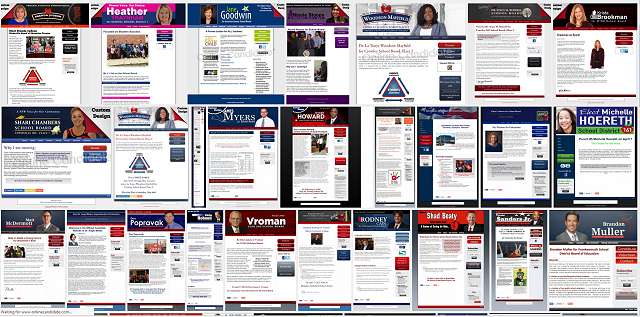
A campaign website gives you room to explain those positions in more detail than a sign, postcard, social media post, or forum answer allows.
Update the site when new information becomes available. Do not leave an early campaign statement online if the district later publishes facts that change the issue.
Questions to Ask About Any Campaign Issue
- What evidence shows that this is a local problem?
- How long has the issue existed?
- What has the district already tried?
- What authority does the board have?
- What would the proposal cost?
- Where would the money come from?
- Who would be responsible for carrying it out?
- How would the district measure results?
- What are the possible drawbacks?
- Can one board member deliver the promised result?
Official Data and Research Resources
- The Nation’s Report Card
National and state reading and mathematics results from the National Assessment of Educational Progress. - NCES School Pulse Panel
National data on attendance, staffing, school climate, technology, and other current K–12 topics. - NCES Education Finance Statistics Center
School district revenue and expenditure data and district comparison tools. - Civil Rights Data Collection
District and school data involving enrollment, programs, student services, school climate, discipline, and access to educational opportunities. - U.S. Department of Education: Individuals with Disabilities Education Act
Federal information and guidance concerning special education and related services. - CISA: Cybersecurity for K–12 Schools
Federal cybersecurity guidance and recommendations for school systems. - EPA: Indoor Air Quality Tools for Schools
Resources for reviewing and managing indoor air quality in school buildings. - Your state education department and school district
Use official report cards, budgets, audits, board records, policies, contracts, facilities plans, and enrollment reports for local information.
Related Campaign Guides
- Plan your school board campaign
- Write your candidate statement
- Prepare your candidate biography
- Plan campaign fundraising
Explain Your Platform to Voters
A campaign website gives you room to explain your priorities, provide background information, publish updates, and respond to questions that come up during the race.
Online Candidate provides campaign website packages for school board candidates and other local races.